

War as Political Insanity
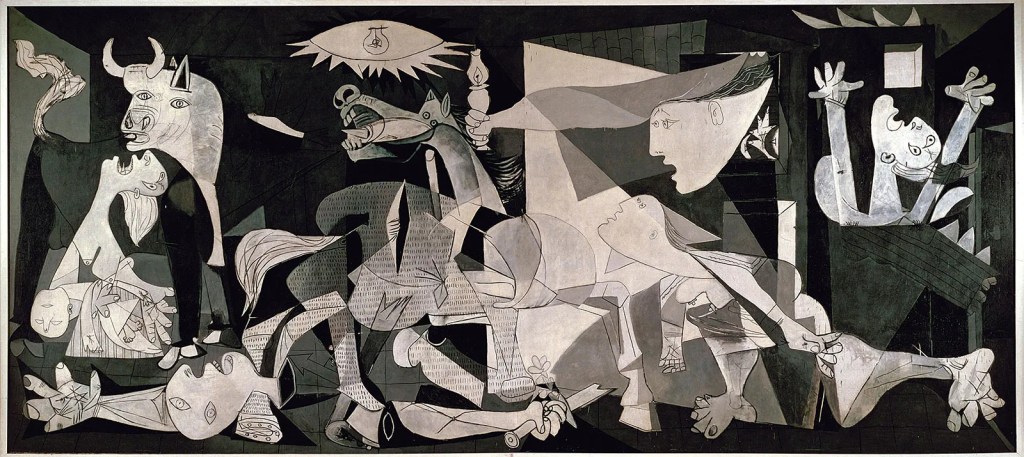
“War is madness” is a cliche, but it is a valid cliche, for three reasons.
First, war is madness in the US sense of mad as in angry. War is a political expression of frustration, anger and hatred. Anger is an outgoing emotional reaction to perceived threat, which bypasses reason. Anger gives us a feeling of wishing to hurt of destroy the object of anger, the Other, immediately, although history, reason and psychology teach us that in the process of destroying perceived enemies, the destroyer is creating yet more threatening Others.
Second, war is madness in the sense of detachment from everyday reality. In war, humans divert from purposeful work, that of trying to create healthy and happy human communities by addressing our real individual, societal and environmental needs. In war we are expected to turn our hand instead to destroying the lives, health and structures of our perceived enemies.
War is the exact opposite of what the human race needs to be doing in the early 21st century, which is of course, to be working to normalise Earth’s greenhouse effect, to satisfy our human needs for health, education and security, and to protect and restore ecological systems. If work is defined as the setting of needed things in order, war must be seen as a form of anti-work.
Third, war is insanity in the sense that Einstein pointed to when he said “Insanity is doing the same thing over and over again, but expecting different results”.
Einstein’s definition applies very much to the Israel/Palestine situation, where both Hamas and the Israeli Government are participating in an upward spiral of hatred, violence, killing and destruction. The mantra of both Hamas and Netanyahu is that they both have a right to defend themselves, yet their actions are not defensive, they are clearly destined to produce the exact opposite of a secure and peaceful future for the people they claim to represent; they are simply storing up hatred against themselves that will rebound as violence in times to come.
Mutual Paranoia
War frequently arises from a state of mutual paranoia. We might characterise it as Paranoia Mutualis Caesarii – the mutual paranoia of political leaders – which often expresses itself in an arms race between two powers or power blocs caught in a vicious cycle of increased arms buildup by one side in response to increased arms buildup on the opposite side. This is clearly the case with nuclear weapons, where the USA and Russia achieved an irrational peak of some 60,000 warheads in the 1970s, which were later reduced to the present 15,000 nuclear warheads, which are still clearly a totally unreasonable number, far in excess of what might be believed necessary to deter a potential enemy.
Robust thinking
This is not to say that the state decision-makers are clinically insane, but that the shared thought processes of their decisions do not conform well with reality. On the other hand, some individuals in the top circles of government could be affected by physical or mental illness, by drugs or by borderline personality disorders, or by cognitive errors on the consequences of their decisions, and it would be reasonable to have regular checks on all Presidents, Prime Ministers and their advisors of nuclear armed states,
The Russian Invasion of Ukraine 2022
Although it is occasionally the case that both sides bear an equal weight of responsibility for a war, the invasion of Ukraine in 2022 shows that sometimes the immediate cause of war is unilateral, since Putin undeniably chose to order an invasion on 24th February 2022.
As with all wars, there are contributory causes, which go back to 2014 with the separatist troubles in the Donbas, and to the Maidan Revolution (which Putin and his supporters characterise as a “coup”). Putin has grievances associated with the expansion both of NATO and of the EU. There are also ideological influences in Putin’s mind. He holds a nationalistic belief that Ukraine was a part of Russia that had been given away in Communist times. Far from being a hard-nosed realist, Putin may be influenced by narratives of his personal Destiny, of a Russian Empire stretching from Vladivostok to Dublin.
Beliefs can be placed on a range between sound, evidence-based beliefs, through generally-accepted, “common sense” opinions, through unshakeable ‘overvalued ideas’ to frankly delusional beliefs.
Putin’s mistake was that he chose not to invoke the Articles in Chapter 6 of the UN Charter which are designed to address precisely the concerns he has. Instead he chose to invade Ukraine.
Once Putin had invaded, Ukraine had no option (given that the groundwork had not been done to make an occupied Ukraine ungovernable) but to resist in order to stay a free and independent nation. If the Ukrainian Government had fled, and the Ukrainian Army had surrendered, an occupation would have followed, with a smouldering guerrilla war fought against the occupiers that would eventually, after maybe a generation, build into an outright war to obtain freedom. The capitulation of Ukraine would almost certainly have encouraged Putin to expand into other countries bordering Russia with a sizeable Russian speaking minority.
All of which show that the pathogenesis of war can be both simple (in this case, invasion by an elected dictator) and complex (in this case, separatist sentiment in the Donbas, foreign intervention, and diverging views as to whether Ukraine should team up with the EU or with Russia).
There is a case to be made for a Standing Conference on Russian Borders.
Given that wars can be seen as a kind of collective mental illness, the question is, how can the outbreak of collective or political insanity be prevented?

