

The UK Government’s Position on Nuclear Weapons
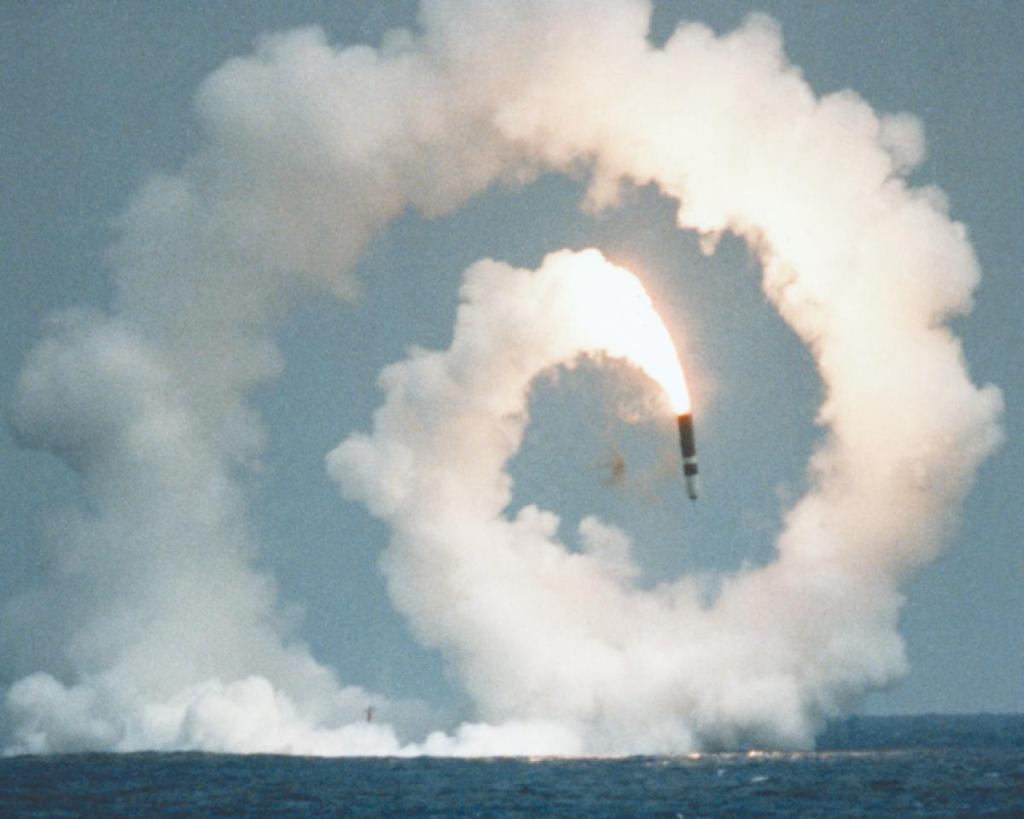
Trident missile malfunction ^
The Government sets out its position on nuclear weapons in section 7.1 of the Strategic Defence Review 2025. The Government’s initial and fundamental claim is that
“The UK’s nuclear weapons deter the most extreme threats to national security and provide critical insurance against the gravest risks and uncertainties of the future”.
Let us look at these claims, starting with the “Insurance” claim.
Nuclear Weapons as Insurance
Insurance is a powerful argument at an emotional level; after all, who would like to go into an uncertain future without insurance of some kind? Insurance is good and sensible. Prudent, even.
But the insurance metaphor does not stand up to scrutiny. Insurance means that we pay a certain amount of money regularly into a common fund. The fund increases, and if in time Something Bad happens to one of those paying into the fund, that person receives an amount of money from the common fund which enables them to make good the loss that they have sustained.
It is impossible to make this analogy with our nuclear weapons of mass destruction (NWMD). If Britain suffers horribly in a nuclear attack, we do not get assistance from some common fund, we just get to retaliate horribly back at the nation that attacked us. We get the dubious satisfaction that the person or persons who launched the nuclear attack on us will suffer just as much death, injury, burns, destruction, disruption, disease, misery and cancer as we have suffered. If not more. And into the bargain, we all, the whole of humanity, whether or not they have nuclear weapons, get to suffer a Nuclear Winter that will almost certainly put an end to civilisation on Earth.
What of the future?
The insurance argument is based on the claim that we do not know what will happen in the future. This is not quite true.
We do know what will happen in the future. If the UK insists in clinging to its NWMD safety blanket, other nations will want to do the same thing, nuclear weapons will proliferate, and the probability of a nuclear war escalates further.
In other words, we will blow ourselves up.
So our NWMD are in no way analogous to an insurance policy.
Let us now look at the deterrence claim
The Deterrence Argument
The Strategic Defence Review (SDR) says (p 101):
“The UK’s nuclear weapons deter the most extreme threats to national security”.
We can happily concede that our weapons do raise the threshold at which Nuclear Weapons holding States (NWS) might attack us, but the threshold is not raised to a degree that makes an attack completely impossible. The wall raised by our nuclear deterrents is not infinitely high. Our NWs do not make us 100% secure and perfectly immune from nuclear devastation, and if we are attacked, our response can only make worse the environmental radiation and nuclear winter brought on by the nuclear interaction.
Nuclear deterrence is not infallible, and if deterrence fails, the consequence is endless destruction: therefore all nuclear weapons must be eliminated from the face of the Earth.
Blinkered vision
The vision of the Governments SDR is therefore only partial, and its whole array of sophisticated arguments falls at the fence of fallibility. Any treatment of a subject that is global in nature, and that relates to the very existence of mankind as a cultured, civilised species must address the whole case, must take a systemic view, and not just talk about one small part of the whole system.
Nuclear deterrence is a complex system. It is not just about the weapons of the UK and the particular British policy specialists who write reviews about them, but of the vast array sensors, imagers, communications, analyses and most importantly, the other national systems that interact with them.
Viewed as a system, it is perfectly clear that the nuclear deterrence system is capable of failure, and because (it bears repeating) failure means the end of human history, all its knowledge, all its achievements, all its skills, its art, sculpture, architecture, music, theatre and literature, its love and creativity, everything, then the nuclear deterrence theory must be discarded and nuclear weapons dismantled and disposed of in a verifiable way (yes it can be done), and international relations must be reset from permanent threat of mutual destruction to permanent assurance of mutual cooperation in managing the common threat that all nations face, a warming planet, a diminishing biosphere and unhealthy societies.
The British Government needs to withdraw the SDR and re-write it, taking into account the fact that deterrence is not infallible, and that therefore we must initiate international action to bring about a Global Zero, a total elimination of nuclear weapons from the face of the earth.
Back to Reducing nuclear weapons to zero

